Limited Time: $50 Off for All Orders Over $500!
Limited Time: $50 Off for All Orders Over $500!

A copper coil beneath the glass creates an alternating magnetic field. When compatible magnetic cookware is placed over the cooking zone, the magnetic field interacts with the cookware and converts electromagnetic energy into heat within the metal itself.
 Step 1: Confirm the Electrical Requirements
Check the product nameplate before connecting the cooktop.
A 120V countertop model must be connected to a compatible 120V supply. Higher-power commercial models may require a 208–240V dedicated circuit and a specific plug and receptacle.
Electrical installation or modification should be completed by qualified personnel when required.
Induction requires cookware with a magnetic base. Common compatible materials include:
Place a magnet against the bottom of the cookware. A firm attraction generally indicates induction compatibility.
Aluminum, copper, glass and non-magnetic stainless steel will not work.
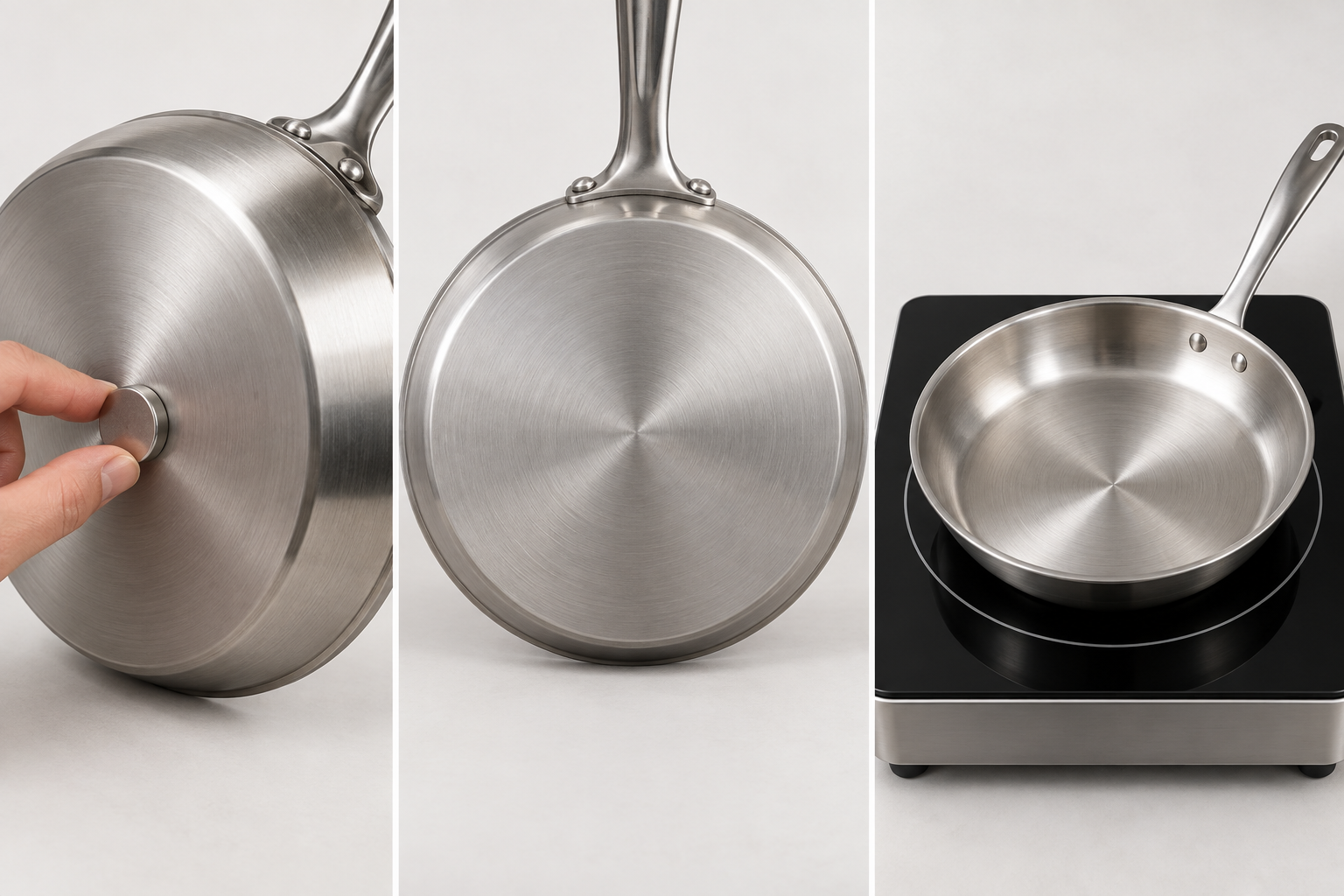
Place clean, dry cookware in the center of the cooking zone before switching on the cooktop.
A flat base supports better magnetic coupling and more even heating. If the cookware base is significantly smaller than the induction coil, the cooktop may not deliver its full available output. Cookware material, bottom thickness and supply voltage can also affect performance.
For home kitchens, cafés and light commercial cooking, our 1800W 120V countertop induction cooktop provides 17 power levels, a 9.25 inch copper coil and non-pulse continuous heating.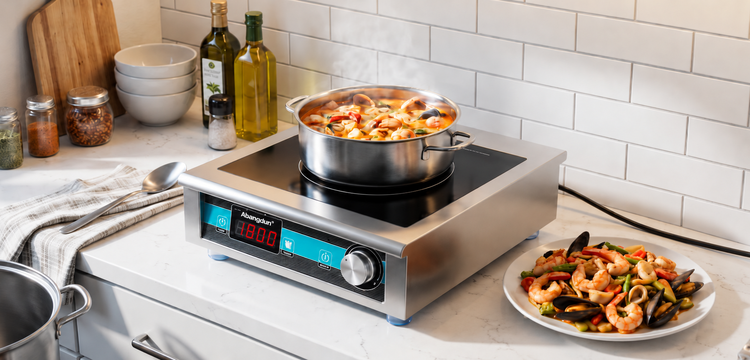
For restaurants and commercial higher-demand preparation areas, our 5000W 208–240V commercial induction cooktop offers 20 power levels and a 9.25-inch double-layer copper coil. This model requires a compatible 208–240V electrical supply. Confirm the nameplate, circuit capacity, plug and receptacle before ordering.
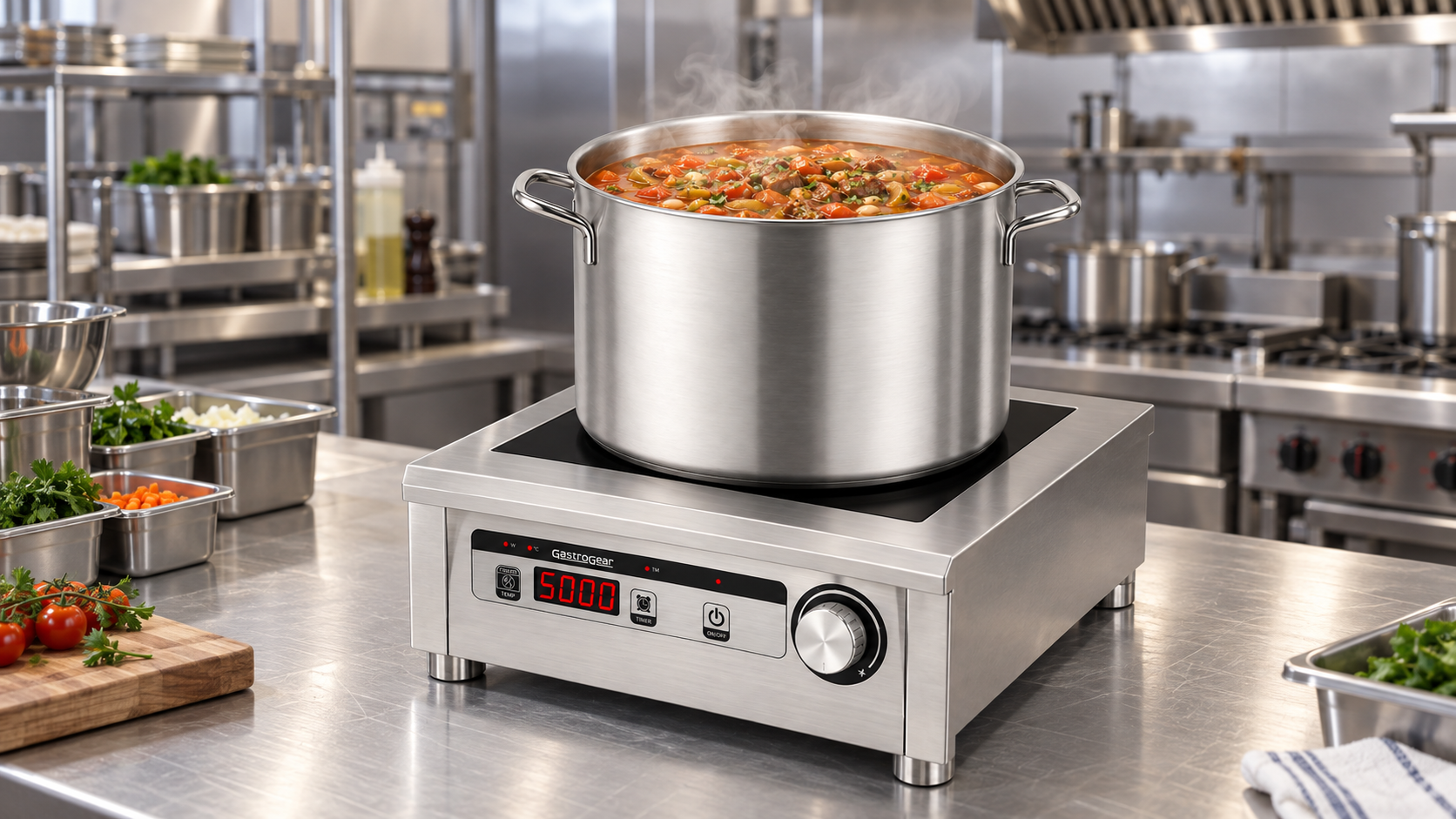
Successful induction cooking starts with compatible magnetic cookware, correct electrical supply and properly centered pan placement. These can help you achieve more consistent results while protecting the cookware and cooking surface.

